Best Time to Visit the Great Barrier Reef
- Mar 25
- 5 min read
When to visit the Great Barrier Reef is one of the first questions travellers ask when planning a trip to Cairns. The short answer: the reef is spectacular year-round, but different months bring different conditions, marine life, and crowd levels.
This guide covers weather, water visibility, seasonal wildlife highlights, and stinger season so you can pick the right time for your reef trip from Cairns.

Can You Visit the Great Barrier Reef Year-Round?
Yes. Reef tours operate every day of the year from Cairns, weather permitting. The tropical climate keeps water temperatures between roughly 23°C in winter and 29°C in summer, which means snorkelling and diving conditions remain comfortable every month.
Operators monitor weather and sea conditions daily, adjusting reef site selections to find the best visibility and calmest water. Whether you visit in the middle of the dry season or during a wet season afternoon shower, the outer reef rarely disappoints. You can browse the full range of Great Barrier Reef tours from Cairns to see what runs throughout the year.
Great Barrier Reef Seasons at a Glance
Cairns has two main seasons: dry and wet. Each offers a distinct reef experience, and the shoulder months between them are worth considering too.
Dry Season (June to October)
Cooler air temperatures, low humidity, clear skies, calm seas
Peak underwater visibility (20–30 metres)
Ideal for first-time snorkellers, photographers, and clear-water enthusiasts
Peak tourist season → book tours in advance, especially during Australian school holidays
Humpback whale migration: June to September
Wet Season (November to May)
Warmer air and water temperatures (up to 30°C air, 29°C water)
Afternoon rain showers; mornings mostly sunny
Coral spawning: November-December
Marine life more active, reef vibrant
Fewer crowds, some operators offer shoulder-season pricing
Stinger season overlaps: box jellyfish & Irukandji present, stinger suits provided
Shoulder Months (April–May & October–November)
Tail end of wet season (April-May) or start of wet season (October–November)
Water visibility improving
Quieter tours, better availability, often better pricing
Warm, comfortable temperatures
Dry Season (June to October)
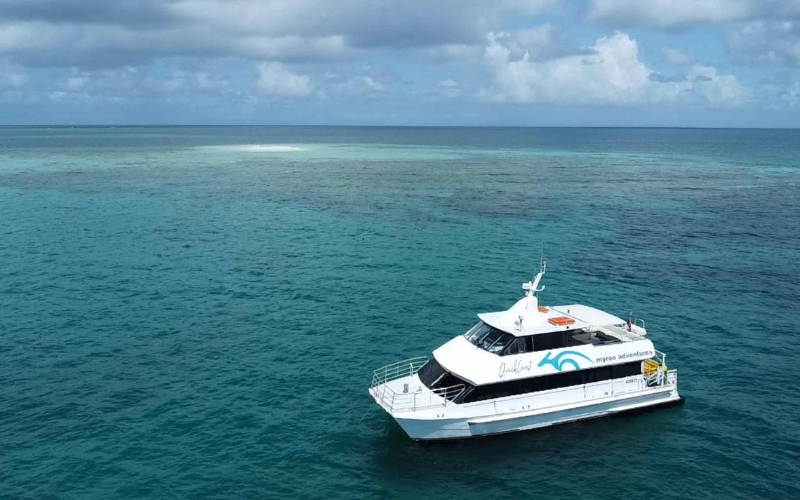
The dry season brings cooler air temperatures, low humidity, clear skies, and the calmest seas of the year. Underwater visibility is at its peak, often reaching 20 to 30 metres on the outer reef. These conditions make it ideal for first-time snorkellers, photographers, and anyone who wants the sharpest views of the coral.
This is also peak tourist season, so tours book out faster and prices tend to sit at their highest. If you're visiting during Australian school holidays (particularly June and July), booking well in advance is a good idea.
The dry season coincides with humpback whale migration along the reef from June through September, adding another drawcard for winter visitors.
Wet Season (November to May)

The wet season is warmer, with water temperatures climbing toward 29°C and air temperatures regularly sitting above 30°C. Afternoon rain showers are common but usually brief, and mornings are often clear and sunny.
This period brings its own rewards. Coral spawning typically occurs in November or December, when entire reef sections release eggs and sperm in a synchronised underwater event that's remarkable to witness. Marine life is more active in the warmer water, and the reef feels vibrant and alive.
Crowds are thinner and some operators offer lower pricing or shoulder-season deals during this window. The trade-off is that stinger season overlaps with the wet season. Box jellyfish and Irukandji are present in coastal waters roughly November to May, though reef tours provide full-length stinger suits as standard. For more detail on how this works, our stinger season guide covers everything you need to know.
Shoulder Months (April to May and October to November)
The shoulder periods offer a best-of-both-worlds window. April and May bring the tail end of warm water temperatures with improving visibility as the wet season eases. October and November still benefit from the dry season's clear water while temperatures start to climb.
These months also tend to be quieter than peak season, with more availability on popular tours and, in many cases, better pricing.
Related reading: For a full breakdown of what reef tours cost across different seasons, see our guide to Great Barrier Reef tour prices.
What You'll See on the Reef Each Season
The Great Barrier Reef is home to more than 1,500 species of fish, 400 types of coral, and a rotating cast of larger marine visitors throughout the year. Timing your trip around a specific wildlife highlight can make the experience even more memorable.
Humpback whales migrate through the outer reef from June to September, and dwarf minke whales appear in the northern Ribbon Reefs during June and July. Manta rays are most commonly spotted between May and August. If turtles are high on your list, nesting season runs from November to March, with hatchlings emerging from around January.
Coral spawning is one of the reef's most spectacular natural events, usually occurring over a few nights in late November or early December after a full moon. It's a rare experience and well worth planning around if your dates are flexible.
For a broader overview of what to expect on your first reef day, our first-timer's guide to the Great Barrier Reef walks through the essentials.
How Does Weather Affect Reef Tours from Cairns?
Tours run in almost all conditions. Brief tropical rain rarely affects a reef day, and once you're underwater, you won't notice it at all. Operators choose their reef sites based on current wind and weather patterns, so even on days that look grey from shore, the outer reef can be calm and clear.
Larger vessels and pontoon-based tours handle rougher conditions particularly well. The Reef Magic activity platform at Moore Reef, for example, operates in every season and provides a stable base for snorkelling, diving, and staying dry with its underwater observatory and glass-bottom boat.
The only real disruptions come from tropical cyclones, which are possible between December and March but relatively rare. On the uncommon days when conditions are too rough, operators will reschedule or refund. The vast majority of reef days across the year go ahead as planned.
What About Stinger Season?
Box jellyfish and Irukandji are present in coastal and inshore waters from roughly November to May. However, outer reef sites carry significantly lower risk than beaches and shallow coastal areas, and all Cairns reef tour operators provide full-length stinger suits at no extra charge during these months.
Wearing a stinger suit is standard practice and doesn't affect your comfort while snorkelling or diving. Many visitors actually prefer wearing one for sun protection regardless of the season.
If stinger season is a concern, the practical takeaway is straightforward: book a reef tour, wear the suit provided, and enjoy the water. For snorkelling tours from Cairns, the suits are lightweight and easy to move in. Our dedicated jellyfish safety guide covers jellyfish types, risk levels, and safety measures in more detail.
When Is the Best Month to Visit the Great Barrier Reef?
There is no single perfect month. The best time depends on what matters most to you.
July-September: clearest water, excellent visibility
April-May & October–November: shoulder months, better value, fewer crowds
Late November: coral spawning
June-July: whale encounters
December-February: warmest water
Best all-round months: September & October for visibility, temperatures, manageable crowds
Plan Your Reef Trip from Cairns
The Great Barrier Reef is worth the trip no matter when you go. Whether you're chasing the clear skies of the dry season, the warm water and coral spawning of the wet, or the sweet spot of a shoulder month, you'll find a reef day that fits.
Browse reef day trips from Cairns to compare tours and find one that suits your travel dates. Still deciding when to go? Our team at the Reef Info Visitor Centre on Abbott Street can help you match the right tour to the right season, with free, personalised advice from locals who know the reef year-round.


