
The Great Barrier Reef supports one of the world’s richest marine ecosystems. From colourful reef fish darting among coral gardens to turtles gliding past at arm’s length, the animals beneath the surface are the reason most people book a reef tour from Cairns.
This guide covers the marine life and coral you’re most likely to encounter on a day trip, plus tips for spotting more species while snorkelling or diving.
What Marine Life Will You See on the Great Barrier Reef?
The reef is home to:
- 1,500+ species of fish
- 6 of the 7 marine turtle species
- Hundreds of coral species
- 100+ types of sharks and rays
Your sightings depend on:
- Where you go – outer reef sites offer clearer water, healthier coral, and greater diversity than inner reefs or island-fringing reefs.
- When you visit – some species appear seasonally (e.g., humpback whales, manta rays).
- How you explore – snorkellers stay near the surface, divers reach deeper walls and swim-throughs.
You can compare what’s available across different reef sites by browsing Great Barrier Reef tours from Cairns, which cover everything from pontoon platforms to small-group sailing trips.
Coral and Reef Structures
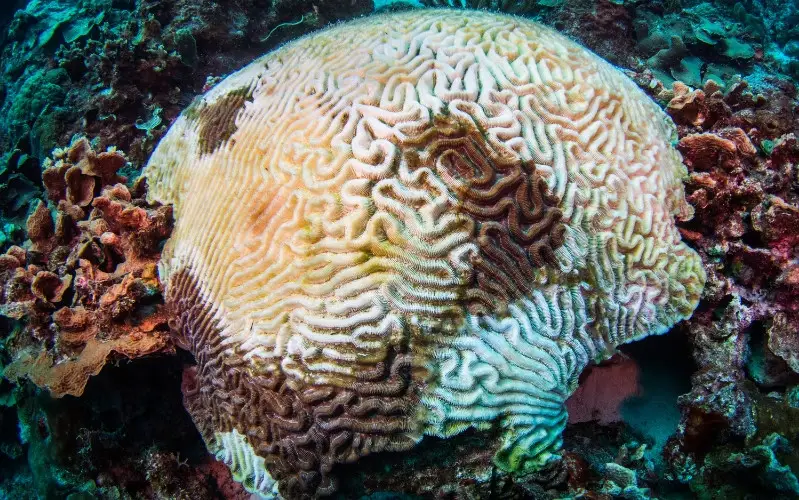
Coral is the foundation of reef life. It is a living animal, made up of tiny polyps that create hard calcium structures.
- Hard corals: staghorn, brain, plate – form the reef’s framework
- Soft corals: sway with currents, adding bursts of purple, pink, and orange
Vivid colours come from microscopic algae inside coral tissue. Healthy coral creates underwater gardens that seem almost unreal.
Special Event: Coral spawning occurs over a few nights in November-December after a full moon, when entire reef sections release eggs and sperm simultaneously.
Reef Fish You’re Likely to Spot
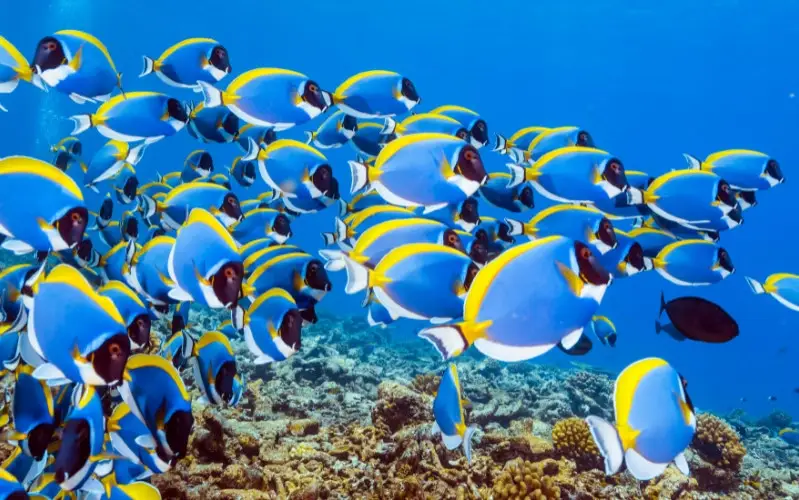
You don’t need to dive deep or swim far to see reef fish. Most are right there in the shallows, moving in and out of the coral.
Clownfish are the ones everyone looks for first, thanks to their starring role in Finding Nemo. They live inside anemones and rarely stray far from home, making them easy to spot once you know where to look. You’ll find them tucked into coral walls and bommies across most outer reef sites.
Parrotfish are hard to miss. They’re large, brightly coloured, and you can often hear them before you see them, crunching on coral with their beak-like mouths. They play a vital role in reef health by breaking down dead coral into sand.
Butterflyfish tend to travel in pairs and are among the most photogenic species on the reef. Look for their distinctive disc-shaped bodies and bold stripes or spots in yellows, whites, and blacks.
Angelfish share a similar shape to butterflyfish but are often more vividly patterned, with striking blues and oranges. They’re a common sight on both inner and outer reef sites.
Wrasses are everywhere. The reef is home to dozens of wrasse species, from small, darting cleaner wrasses to the enormous Maori wrasse, which can grow to nearly two metres long. Maori wrasse are famously curious and will often approach snorkellers for a closer look. Spotting one is a highlight for most visitors.
Surgeonfish, including the blue tang made famous as Dory in Finding Nemo, often appear in large schools that shimmer as they change direction together.
Turtles, Rays, and Larger Marine Life
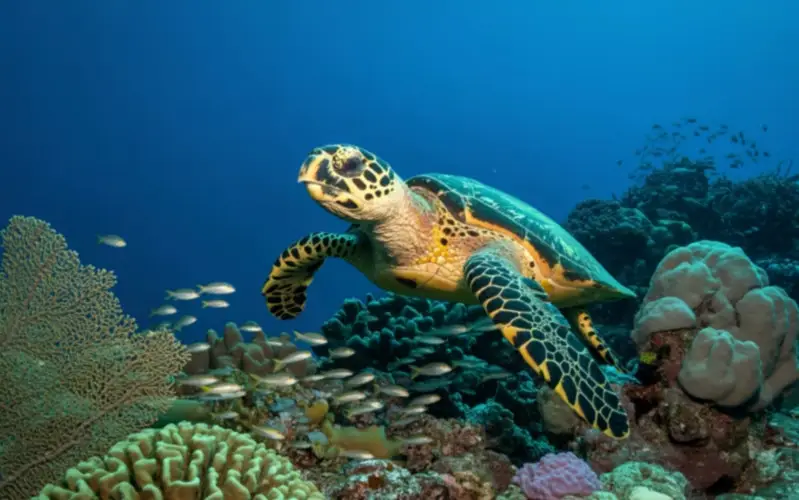
These are the encounters visitors remember most, and they’re more common than you might expect on a reef day trip from Cairns.
Green sea turtles are the species you’re most likely to see. They’re found across the reef year-round and are often spotted grazing on seagrass or cruising past snorkellers at a relaxed pace. Hawksbill turtles are less common but turn up regularly on outer reef sites, usually feeding around coral ledges.
Reef sharks are a frequent sighting and nothing to worry about. Whitetip and blacktip reef sharks are the species you’ll encounter most. They’re small, calm, and completely uninterested in people. Seeing one glide past is a thrill, not a threat.
Manta rays and eagle rays are found across the reef, though they appear more frequently from May through August. Their size and grace make them one of the most memorable sights underwater.
Giant clams sit wedged into the coral, their mantles displaying vivid blues, greens, and purples. They can live for decades and grow to impressive sizes. You’ll see them on most outer reef tours if you look down into the coral gardens.
For tips on getting comfortable in the water before your first encounter with this wildlife, our guide to snorkelling the Great Barrier Reef is a practical starting point.
Seasonal Wildlife Highlights
The reef’s marine life shifts with the seasons, and timing your visit around a specific wildlife event can make the trip even more rewarding.
Humpback whales migrate through the outer reef from June to September, and dwarf minke whales appear in the northern Ribbon Reefs during June and July. Coral spawning typically occurs in November or December. Turtle nesting season runs from November to March, with hatchlings emerging from around January.
This section only scratches the surface. For a month-by-month breakdown of what to expect and when, the full seasonal guide goes into much more detail.
Related reading: Our guide to the best time to visit the Great Barrier Reef covers weather, visibility, and seasonal marine life highlights across the year.
Where to See the Best Marine Life from Cairns
Not all reef sites are equal when it comes to marine life. Outer reef locations consistently offer better visibility, healthier coral, and a wider range of species compared to inner reef or island-fringing reef.
Island-based reefs at Green Island and Fitzroy Island are accessible and enjoyable, but the coral tends to be less varied than what you’ll find at outer reef platforms and sailing tour sites. If marine life diversity is a priority, heading further offshore is the way to go.
Diving unlocks an entirely different level of the reef. Deeper walls, swim-throughs, and overhangs are home to species that snorkellers rarely see, including moray eels, lionfish, and larger reef sharks. If that interests you, our scuba diving guide for all experience levels covers what’s involved.
For a snorkelling-focused outer reef trip, tours like Passions of Paradise visit multiple outer reef sites in a single day, giving you the best chance of seeing a wide variety of marine life.
Tips for Spotting More Marine Life on Your Tour
You’ll see plenty just floating on the surface. But a few simple habits will help you spot more.
Swim slowly and quietly. Fast movements push fish away. The less you splash, the more the reef opens up around you. Pause in one spot for a minute or two rather than constantly swimming, and you’ll notice species emerging from the coral that you’d otherwise miss.
Look under ledges, into crevices, and around the base of coral bommies. That’s where turtles rest, clownfish hide, and reef sharks often cruise. The best sightings usually come from paying attention to the edges rather than scanning open water.
Listen to the marine briefing on board. Most Cairns reef tours include a presentation from a crew member or marine biologist who’ll explain what lives at the specific sites you’re visiting and where to look. It’s one of the most useful parts of the day.
For a broader overview of what a reef day looks like from start to finish, our first-timer’s guide to the Great Barrier Reef covers the full picture.
See the Reef’s Wildlife for Yourself
Marine life is the reason the Great Barrier Reef draws visitors from around the world, and a well-chosen tour from Cairns puts you right in the middle of it. Whether you’re watching a Maori wrasse follow you through the coral or locking eyes with a green turtle mid-swim, these are the moments that stay with you.
Browse reef day trips from Cairns to compare tour styles and find one that matches what you want to see underwater. Want to know which tour gives you the best chance of spotting turtles or swimming with Maori wrasse? Our team at the Reef Info Visitor Centre on Abbott Street can point you in the right direction.
